Showing posts with label writers. Show all posts

Friday, October 10, 2014

So You Want to Be An Author

Two things came together lately. First has been a number of articles about writing and the publishing industry. Articles such as "My Best Seller Made Me Nothing" on what it means for your book to be a best-seller and what authors actually make, alerts from Writer Beware and Dear Author on problems with publishers plus even ones about various state IRS agencies considering artists and authors who don't make a lot of money as "not professional".

The second was the request from a student to answer questions about what it means to be a writer. This isn't new; I've had such requests before. The schools usually have a questionnaire that the students have to follow as they interview people in a career that the students are interested in. Some students do their own research to check on the field, and only ask some questions during the interview, but some will just pass along *all* the questions.

The questions that the student should research are the standard ones about job requirements, how many such jobs exists, possible salary, etc. As a former librarian, I know one of the best resources on occupations is the Occupational Outlook Handbook, and for future reference the url for Writers/Authors is http://www.bls.gov/ooh/media-and-communication/writers-and-authors.htm. And, yes, most of the answers to the questions on the questionnaire can be found there.

However, those researching this question should keep in mind that the "average" salary listed in the OOH for a writer doesn't quite reflect that of a lot of authors I know. Most of us have day jobs, and the college degrees are needed for that job rather than the novels we write (the summary is probably for newspaper and journal writers back in 2012. But even for those writers the field has changed). For most authors, average writing income will depend on how many books they have and how many of those are still earning royalties. Jim C. Hines has posted on his blog his writing income over the years (two posts here). John Scalzi posted about his various income streams (since it's best to have more than just one today) back in 2010.

As far as the education background needed to be a writer, the main one to me is English Composition courses (or the equivalent for those writers in other countries). If you have a good grounding in grammar and spelling, you're set. I didn't get an advanced degree in creative writing; back when I started writing those instructors teaching creative writing looked down on genre such as Science Fiction so I didn't waste time or money arguing with them. I know a few beginning writers nowadays who have gone on to get an MFA in creative writing and time will prove whether the degree is worth it for them or not.

Another requirement I would suggest is to read. A lot. In many genre as well as what you enjoy. Study the books of the authors you love and see if you can figure out what they did to make you love their work so much.

Another important requirement is to write. And not just the stories you want to tell. I know several writers, myself included, who worked on the student newspaper while in high school. That taught me how to write to a deadline, how to keep to a specific word count and how to write even when I wasn't in the mood. (this will also help later for student papers in college)

Are you an introvert? Great! You'll be spending a lot of time at your computer writing. Are you an extrovert? Also great. You'll need that side of your personality to go out and promote your book at conventions and book signings. Publishers nowadays expect their authors to do a good share of their own promoting. The days when an author could just sit back and let the publisher do that side of the job are long gone. And if you decide to go into self-publishing, you'll be doing even more promoting.

Any other suggestions you would give to a young writer researching this as a career?

Or, any reaction to recent articles on the industry?

Wednesday, June 19, 2013

WHY DO I WRITE?

Sometimes I ask myself that question. Many people, before they become writers, think they’ll write a book, become a New York Times best seller, and make a fortune. Most of them never write a book, and the ones that do wake up to reality before very long.

So, obviously, I don’t write for the money. If I did I’d have quit years ago. Maybe someday, my stories will earn enough to buy a new car or fancy clothes or to take a vacation to Hawaii. Until that day arrives, I’ll buy a couple of books with my royalties and read.

Some people dream of writing a novel that Hollywood will snap up and turn into a top box office movie. Interviews, spotlight, celebrities, and trips around the world, every viewer gushing over the characters, the story, and waiting for the sequel.

Ah, yes, to see one of my novels on the big screen, or the little screen for that matter, would be awesome. I could get into that scene for sure. Successful book. Successful movie. A dream come true. No one has mentioned making a movie for my work. (I think they’re passing up a marvelous opportunity.) So I’ll just enjoy watching the success of other writers and imagining what their world is like, seeing their characters come to life. I’m truly happy for each of their successes.

Authors often write to send a message to friends, family, and the world. Perhaps something happy or sad, frightening or fulfilling in his or her life demands to be told, so others might learn from his or her experience. We see many stories written about special children or a traumatic even in one’s life or a story about making choices, based on personal experiences.

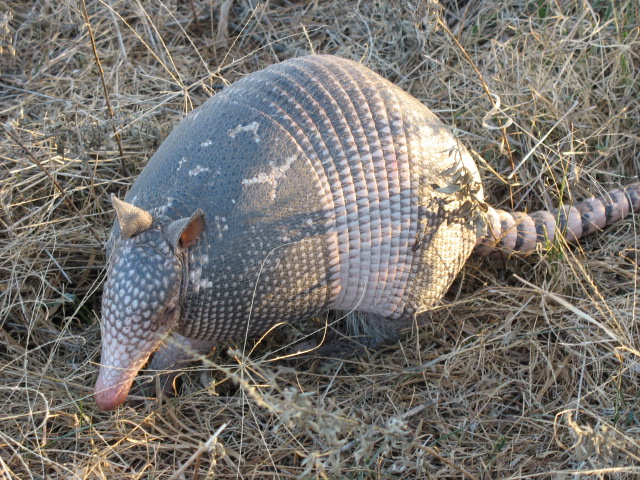
I believe my personal experiences influence much of my writing. A magazine article I read about advances in medicine and science prompted the idea for Secrets I Have Kept. A twilight ghost tour of the historic district of Charleston, SC, resulted in Listen to the Ghost. Life on Hold was born from a newspaper article I read about a boy and girl that found the son they had given up for adoption eighteen years earlier. My picture book, Frankie’s Perfect Home, was born when a young armadillo made his/her home in our pasture.


So why do I write? I write to share my world, or my view of the world, with others. I write because I find people and animals, whether contemporary or make believe, fascinating. I write to satisfy a need inside me that I really can’t explain, but it’s there. I write, hoping to give readers, both young and older, an escape from every day life to another place, another time, if only for a while.

Why do you write?

Monday, March 4, 2013

Writers who have gone to the dogs

Lord Byron & Boatswain
When it comes to wearing their hearts on their sleeves, writers have gone to the dogs. Lord Byron was enormously fond of his Newfoundland named Boatswain, whom he nursed until his death after he was infected with rabies. The poet inscribed Boatswain's headstone with one of his best-known texts, “Epitaph to a Dog.” Like Byron before him, American playwright Eugene O'Neill wrote a touching eulogy to his Dalmatian, Blemie. Sword and sorcery fiction writer Robert E. Howard’s dog Patches was named after the famous jester who disappointed the king and was sent outside to sleep with the dogs.

Reclusive poet Emily Dickinson had a Newfoundland named Carlo. Together they roamed the meadows and woods surrounding her home in Amherst, Massachusetts. Dickinson remarked that dogs are better than people because “they know – but do not tell.” New England novelist Edith Wharton’s husband suffered from acute depression so she found companionship in her six lapdogs, including Chihuahuas, Pekingese, and Poodles. Emily Brontë kept a ferocious canine brute named Keeper. It was she who tamed him of his aggression and it is widely believed he changed her life.

Elizabeth Barrett Browning & Flush
Elizabeth Barrett Browning’s Cocker Spaniel, Flush was her devoted friend while she was confined to her sickbed in London. Browning wrote about Flush’s adventures in letters to her friends. Her beloved dog was dognapped twice and ransomed. She eulogized Flush in a slushy poem, “To Flush, My Dog.” Virginia Woolf’s first published essay was an obituary of her dog. Years later, her tribute to Elizabeth Barrett Browning and her famous canine companion, Flush: A Biography was published. Though largely ignored in her bibliography Flush remains Woolf’s bestselling book to date.

Dog lover and psychologist Maureen Adams wrote about these wonderful women writers and their dogs in Shaggy Muses: The Dogs Who Inspired Virginia Woolf, Emily Dickinson, Elizabeth Barrett Browning, Edith Wharton, and Emily Brontë.

In the 21st century you will find the likes of Jon Katz, Ted Kerasote, Dean Koontz, Julie Klam, Merrill Markoe, Mark Doty, W. Bruce Cameron, Cynthia Rylant, Ann Martin, and Alexandra Day (to name a few) writing about dogs. One of my favorite books, The Quotable Dog Lover (edited by Patricia M. Sherwood) contains memorable dog quotes from dozens of writers.

For your enjoyment here are photos of writers and their dogs:

Jill Krementz Photo Journal -- Top Dogs

Adorable Pictures of Famous Writers and Their Pets


********************

Love dog stories?

"Crazy Bitch tells the story of the deep love that can exist between humans and dogs, as well as the intense - and sometimes very complicated - love that can exist between two dogs."


Peggy Tibbetts

Crazy Bitch ~ a dogoir
Letters to Juniper ~ 2012 Colorado Book Award Finalist
PFC Liberty Stryker ~ “a wild ride like no other”

Become a Facebook fan
Love dogs? Like Zeus and Pepé -- the odd couple
 

Thursday, February 2, 2012

Do Writers Need A Brand?


I want you, dear Reader, to welcome a new guest to my blog. Fani Nicheva is in one of my writing groups and posted this article which I found insightful and wanted to share with you all. As you know, I have branded myself as the Yellow Hat Writer — hence the yellow hat in all of my author pictures. I have even attended writing conferences and been recognized because of my yellow hats. So I know branding works.
To brand or not to brand? That is the question.
If you are a writer, branding might seem to you like the most disturbing proposition.
After all, you are not a box of cereal residing on a shelf, fighting for consumer’s loyalty and attention.
Some time ago, when I was working in an ad agency, my creative director said to me “Products live on shelves; brands live in people’s minds.”
And this is where branding starts to get interesting for writers.
Brands live in people’s minds because they are nothing less than good stories.
Dear writers, it is time to for you to acknowledge that of all business professionals out there you possess the most rare and dangerous of talents – writing good stories.
Now, to go back to the “branding yourself” question – this is where branding starts to get challenging.
Yes, writers can design good brands (or write good stories) for other businesses, but can they do the same for themselves?
And most of all, do they need to?
The answer is it depends. It depends on how aware of yourself or rich and famous you want to be as a writer.
It is important to note here that branding can bring you more awareness of yourself without being rich and famous, but it won’t make you rich and famous without the awareness.
Personal branding has become quite the buzz word lately. Personal brands are similar to product brands in a sense that they undergo a process of simplification and systematization (which is why many authors abhor the “B” word as the antithesis to everything complex and meaningful).
However, personal brands differ from product brands on one fundamental level – spiritual alignment. Many large corporations suffer misalignment with their product brands for a variety of reasons – failed promises, poor management and customer service.
Solopreuners, on the other hand, have to be able to live the credo of their personal brands. You, as a writer, are not a product. But you can offer products. In fact, you get to define your products consciously, and carry out their messages with conviction and elegance on an everyday-basis.
Three years ago, the Financial Times published a study which showed that only 9% of professionals have a job in line with their personalities.
Personal branding will help you align your talents with your services.
Apart from elevating you to a place of high awareness, branding can work other wonders for you as well. It can make you more money. But remember, the order in which it works for personal brands is: awareness first, money next.
The reason why I stress personal awareness so much is because it will help you carry out the following commitments:
1/ Financial commitment:
In order for your brand to truly graduate to adulthood you will need to treat yourself as a business operation. If you as a writer are content to live from a project to project and take whatever job comes your way, then branding shouldn’t concern you as much. Many freelancers set up shop literally for free, in order to be flexible and “bail out” easily if needed. On the other hand, brands invest time and money into their operation and expect serious return on that investment. They also develop systems of marketing, bookkeeping, sales tracking, strategic planning and graphic design.
2/ Focus commitment:
If you want to be perceived as “THE ONE” in a certain area of writing style or expertise, then by all means, start thinking about a brand. That means one specific expertise, one audience. Do you want to be known as the ghost writing specialist, the “underdog” writer, the “high-brow intellectual” writer, the fresh opinion writer, the journalist? Yes, I am talking about a niche.
Because the modern marketplace is such a crowded room where nobody can hear each other, the simpler and focused you are, the easier for clients and audiences to find you and trust you.
Authors with a particular focus of work are Stephen King, J.K. Rowling, Dan Brown, Elizabeth Gilbert, Jodi Picoult, Malcolm Gladwell, Joan Didion, Seth Godin just to name a few.
These commitments could be very trying and stringent for creative people like writers indeed. Some of you simply won’t have the upfront capital to invest in business and personal branding. Some of you may have already started to invest, but have stopped because of depleted resources. Or you might think that applying the principle of one niche kills the creative instinct. Whatever you’re thinking, you’re right. Branding is a reductive, and therefore quite limiting in its choices endeavor.
But most businesses fail not because they didn’t undergo the rigorous schooling of branding, or because they didn’t hire an accountant, or an expensive graphic designer for that matter. They fail because they lack the awareness seed, the alignment with the product or services they offer.
So don’t sweat about the technicalities of branding. But do sweat about that story which you will center your brand and services around. If you have an idea about the story of your personal brand, then everything else will fall into place.
Ignite your passion of storytelling, your intimacy with the journey of the archetypal heroes that have been populating the human mind for centuries. Pick an archetype for yourself, try it on, and see if it fits. The Hero maybe, or the Sage, the Trickster, the Mentor, the Sapeshifter, the Threshold Guardian.
Switch them around. You can evolve as a personal brand just as often as any hero of the writer’s journey.
Recently a famed journalist writer with a distinguished brand, Gene Weingarten, wrote an article “How branding is ruining journalism.” In a curmudgeonly manner, which has become his signature, he denounces personal branding and likens it to marketing Cheez Doodles.
“Newspapers used to give readers what we thought they needed. Now, in desperation, we give readers what we think they want. And what we seem to think they want is happy, glitzy, ditzy stuff.”, he says.
As a graphic designer and a writer I had to disagree with him, until I read the last line:
“When I was a hungry young reporter in the 1970s, I thought of myself as a superman, an invincible crusader for truth and justice… My goals, however, were unambiguous, and heroic: 1) Get great stories that improve the world. 2) Get famous. Note the order. First came the work.”
I realized that what he fusses and wails about is not the creative act of brand-making. He revolts against the insidious results branding has on society when performed without spiritual alignment.
It also makes sense that Gene Weingarten didn’t have to fight for the spotlight of his brand back then. Back then the marketplace was a different beast.
But I dare to imagine that who he is today has to do less with any external circumstances, and more with that “superman” journey he adopted in the first place.
Fani Nicheva is a graphic designer and a writer, who serves creative professionals in their quest for a meanigful and long-lasting identity.
Visit her website at www.bfsp.net or read her blog www.aproposdezign.com  She co-founded Bigfish Smallpond Design studio with her partner in Santa Cruz, CA. Creative branding, typography, book design, comparative literature, mythology, storytelling, logos, websites, introspection and lollygagging are her favorite activities.